The Artist's Journey: Creating What I Love

As a visual artist specializing in colored pencil work, art occupies my thoughts nearly every waking hour. While I explore many creative dimensions, I have to admit—art surpasses all my other interests. Years ago, when I worked as an illustrator, I used a variety of mediums, making me somewhat of a "Jack of all trades, master of none." Often, creating what a client wanted felt confining, limiting my ability to draw what truly inspired me. Still, my customers appreciated my work, especially my custom art pieces.

Today, I prefer to explore different artistic avenues, often using those same mediums but with more freedom. I’ve also experimented with drawing a wide range of subjects, including pet portraits, wildlife, and landscapes that reflect my connection to Minnesota’s natural beauty. Sometimes, I find myself in uncharted waters, constantly seeking to please both myself and the public eye. While I may fall short at times, I always get back up and try again.

Just as there are countless shades in my colored pencils, the public has an equally broad array of interests in art. As a result, I dabble in everything from figurative art to wildlife, sports, still life, and even a little cartooning.

Trying to predict what others will enjoy is a daunting task—and I’m not very good at it! So, I usually return to creating what brings me joy. Whether it’s a custom pet portrait or a wildlife scene inspired by the landscapes of Minnesota, I simply create images that make me happy. And if along the way someone shares my passion, it enriches my life knowing that my work resonates with others. Ultimately, I create for myself, but the appreciation of my art by others is the most rewarding feeling of all.

All Pencils Have A Purpose

People ask me, “Hey Tom, do you want some Crayola colored pencils? My children no longer use them.”

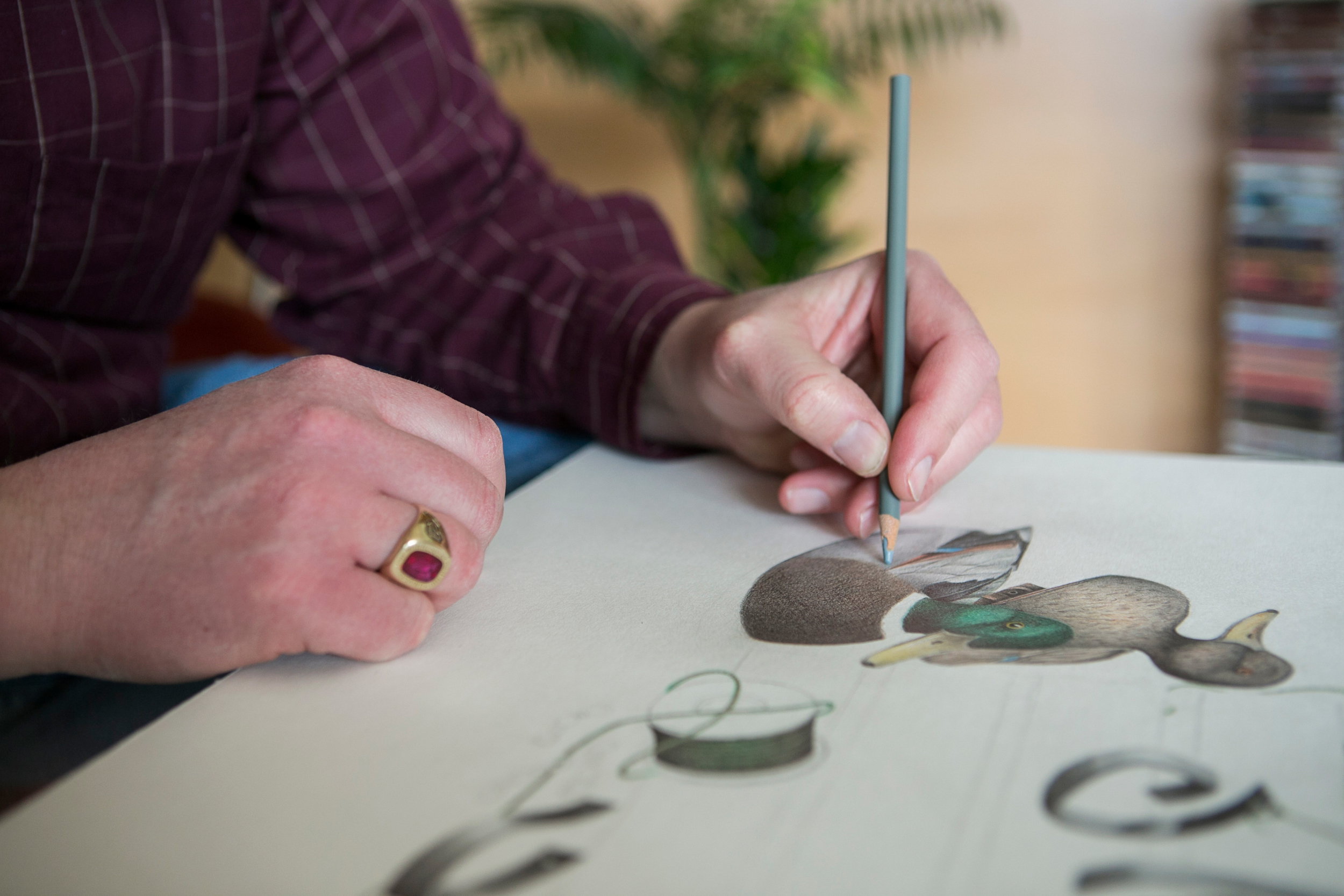
I never say no! In my world of art I use four types of pencils, and each brand has its own character. Some have a light and pastel appearance while others have a rich and more opaque look.

For example, when I’m creating a highlight or reflection in my illustration Crayola and Rose Art pencils are the best choice. After using the pencils, I’ll skid a kneadable eraser over a chosen area to develop a highlight.

On the other hand, when trying to achieve a darker richer look, Prismacolor is the best!  Prisma and Derwent pencils also offer colors that the others do not carry.

You wouldn’t believe the different textures and colors you can create with the various brands of colored pencils out there.

So if you have colored pencils your family no longer uses and you don’t know what to do with them… send them my way. I never say no!

Yours truly,

_web-Pencils-With-a-Purpose-01.jpg

Feed the Passion

Passion is defined as, "An intense desire or enthusiasm for something."

Artists have an insatiable need to create. I parallel an artist's career to some extent with an actor or actress traveling to Hollywood, taking a job or a number of jobs to support him or herself financially, and waiting for a shot on stage.

Since my leaving the graphic design field to pursue fine art, I have had to put on many different hats - taking jobs I would never have predicted doing in a million years. All unrelated to my field of expertise.

Taking the leap into acting, singing, writing, photography and art can be a rewarding experience but be prepared because it does have its challenges. I believe it's worth it! 

How Long Does it Take?

This question is usually the first one asked of me when someone is viewing my art.

When I start a new project, I usually have good intentions to keep a record of the time it takes to complete the artwork. I used to record my work time when I was a freelance artist because it was how I billed my clients. Now that I’m working for myself, time isn’t a large priority.

Time spent during a project isn’t just time on the drawing board. Coming up with a concept, preparing a scene with props, staging a photo shoot, and working on sketches all add to the final number.

The concepts created come from observing everyday life and watching art trends. I have to be comfortable with what I’m drawing. Let’s say, for instance, I’m drawing a cowboy. Since I am always striving to be accurate, that could be difficult for me because I’m not entirely knowledgeable with that subject. Oftentimes a new idea will develop from daydreaming. You would be surprised how often that happens with artists!

A good amount of time is spent collecting the props. You probably wouldn’t believe it but finding the right person, animal, and objects for a scene can send me on a wild goose chase. When preparing the scene, I always go back to the basic rule of “left to right.” I try to steer my audience’s eye in the direction I want, so placement of the objects in the scene is crucial.

The photo shoot is important in order to record a pose, an expression, and a detailed portion of the scene. For instance, taking a photo of a person’s hand. Each finger is unique and different from the others. It’s all about the little details and the photo helps me capture that. It’s also important to record the correct lighting and shadows. If they are not precise, they can ruin a picture.

When I’m drawing, I take my time because getting ahead of myself can spell disaster. If I were to rush and make a mistake, chances are I would either have to add an object or subtract something from the scene.

The pencils I work with come in many brands, levels of hardness, and richness. I use a variety of brands at different times. Being mindful of which pencils to use at certain times can be laborious and oftentimes takes quite a bit of time. 

Overworking the paper is also another situation that could arise if I’m not careful. Mistakes and corrections do happen, but if you make too many, the surface of the paper will start to break down.

When you’re working too fast, the result may be what is called, waxing. Waxing is when you place too many layers of pigment on one spot and the tooth texture on the paper’s surface has been destroyed. The paper’s ability to receive any more pigment has left town. At that point it’s a rescue, if at all possible!

When I believe I have completed the work, I will either have a feeling of satisfaction or reservations. The next step is to place the piece into storage and take a break from looking at it. Oftentimes, not looking at it for a few days or more can be beneficial because you have been staring at it for so long! When I return after some time, I usually see a mistake or discover places where I can further enhance the work.

In closing, making a work of art takes a lot of time. When I’m finished, I can’t wait to go out and celebrate!

Yours Truly,